
While Shilajit and Ashwagandha are quite similar in the realm of traditional medicine and natural supplements, there are still some differences that make them unique. These two are dietary supplements that have been used in Ayurvedic medicine for centuries and have now become popular in the whole world. This blogpost focuses on distinguishing Shilajit from Ashwagandha and presenting arguments that might help the reader make his or her own choice.
What is Shilajit?

Shilajit is a kind of tar-like resin, which is the main component in it, mainly found in the mountain areas of the Himalayas. Shilajit is formed through the years with the breakdown of plants and organic matter. Besides its anti-aging effect, Shilajit with organic acids like fulvic acid and over 84 minerals play a significant role. In Ayurveda, Shilajit has always been a main player when it comes to energy and immune system, as well as overall well-being.
Shilajit has been identified as an adaptogen, so it assists the body in dealing with pressure and consequently returning the equilibrium. Shilajit is supposed to help the body with matters such as energy, brain function, fertility, and old age through its basic ingredients such as organic acids, which probably help to deliver minerals to the cell, adopt and utilize them.
What is Ashwagandha?

Ashwagandha, known as Withania somnifera in scientific terms, is a perennial green which hails from India and Africa. Indian ginseng, also named Indian winter cherry, is a famous herb in Ayurvedic medicine. Its rhizomes are mainly used to make various medicinal products.
Ashwagandha is an adaptogen and it is very good with stress reduction, anxiety handling, and promoting mental health. It is often used to improve the user’s physical abilities, help with the immunity of their bodies, and it even can give them restful sleep. Some key plant secondary metabolites, particularly withanolides, are what people use to think that these plant products might have health benefits.
Key Difference Between Shilajit and Ashwagandha
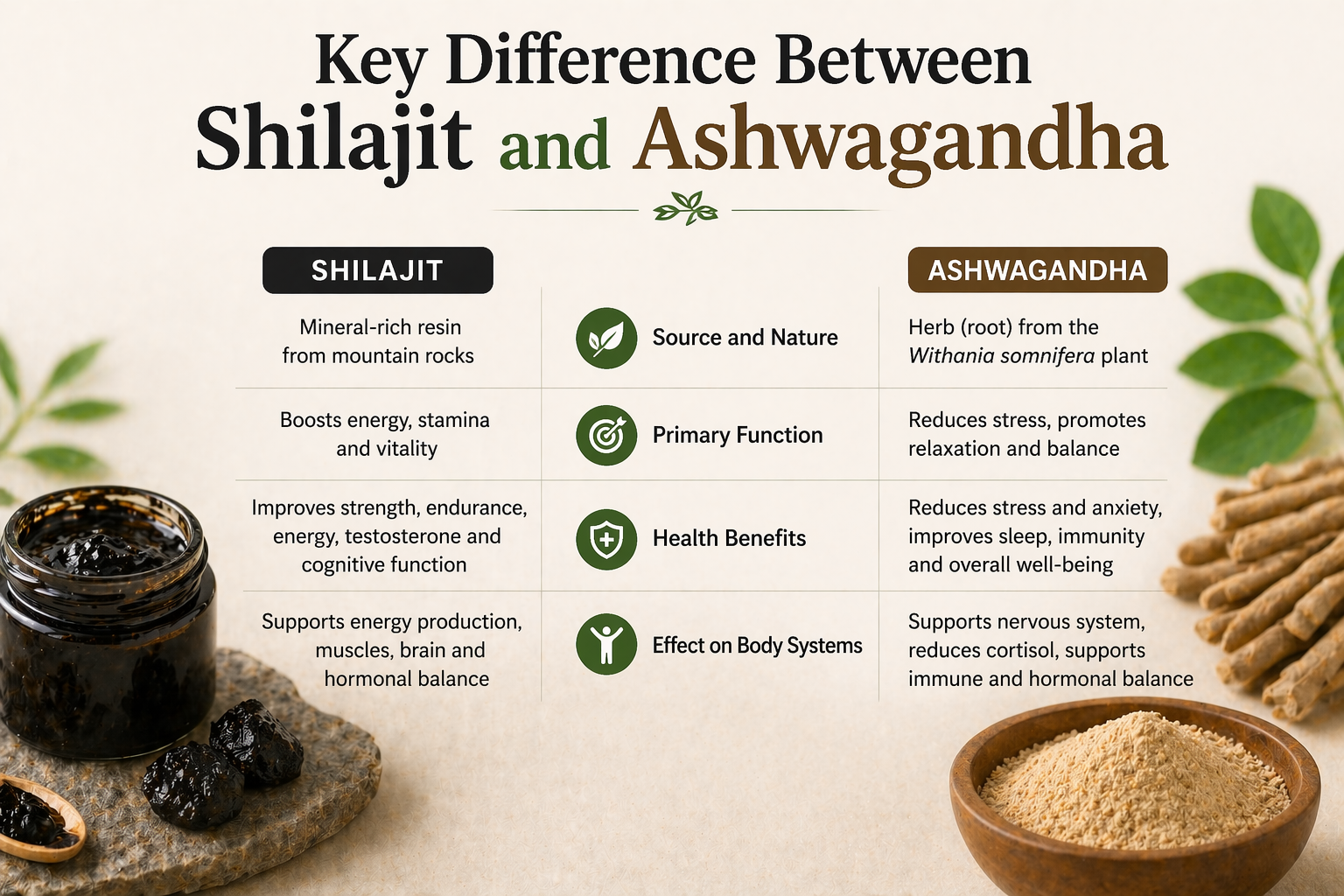
Understanding the difference between Shilajit and Ashwagandha is important before choosing the right supplement for your health. While both come from Ayurveda and offer powerful benefits, they work in very different ways in the body.
1. Source and Nature
Shilajit is a natural mineral mixture that has been created over hundreds of years in Himalayas due to the decay of plants. It contains a lot of important minerals and fulvic acid which is a great source of physical well-being.
Conversely, Ashwagandha is a botanical herb; more accurately, it is extracted from the root of the Withania somnifera plant. Being an adaptogen, it means that it can help the body recover from stress and preserve the state of balance.
2. Primary Function
Shilajit primarily acts to increase energy and boost physical performance. It operates a cellular level by stimulating energy production and hence, it is the best supplement for people who experience weakness or tiredness.
Ashwagandha mainly functions as a stress reliever and mind soother. It decreases the level of cortisol and nourishes the nervous system, which supports the body in relaxing and recovering from stress.
3. Health Benefits
Shilajit is widely used for:
- Increasing stamina and endurance
- Enhancing physical strength
- Supporting male reproductive health
- Fighting fatigue and weakness
Ashwagandha is mainly used for:
- Reducing anxiety and stress
- Improving sleep quality
- Enhancing mental clarity and focus
- Supporting immunity and hormonal balance
4. Effect on Body Systems
Shilajit primarily targets the physical and metabolic systems of the body. It facilitates better oxygen transport, energy generation, and general liveliness.
On the other hand, Ashwagandha is working primarily on the nervous as well as the hormonal systems. It supports the mind in relaxing, the emotions in being steady, and enhances sleep quality.
Uses of Shilajit vs Ashwagandha

You can easily figure out which one of the two – Shilajit and Ashwagandha – works better for your health and lifestyle if you know the different ways of using them. Though both of these herbs are immensely potent in their own right, they serve different purposes when it comes to everyday use.
Uses of Shilajit
In general, Shilajit is used to enhance the body’s physical capacity and life force.
Common Uses
- Energy Booster: Most of the time, it is used for combating tiredness and increasing physical energy especially for people who are on their feet a lot.
- Enhances Physical Performance: This is a major go-to for athletes and people who work out at the gym as it helps them increase their endurance and strength.
- Supports Male Health: It is a highly potent natural product that is especially known for its ability to increase testosterone production and raise energy levels in men.
- Improves Brain Function: It provides an overall mental boost with a special emphasis on memory and concentration.
- Detoxification: It is good for overall health as it helps the body get rid of harmful substances and also increase metabolic efficiency.
Uses of Ashwagandha
The main reason people down Ashwagandha is its ability to calm the mind and promote mental health.
Common Uses
- Stress & Anxiety Relief: It is a very effective natural solution for not only reducing stress but also promoting a calm state.
- Improves Sleep Quality: It is widely consumed before going to bed to obtain a deep and sound sleep.
- Supports Mental Clarity: Increases the ability to focus, remember and perform other mentally challenging tasks.
- Balanced Hormones: Works effectively in both men and women towards achieving the desired hormonal balance.
- Boosts Immunity: Enhances the body’s resistance to the diseases and improves overall health.
Which One Is Right for You?
The battle between Shilajit and Ashwagandha might depend mostly on how your body and your life overall are doing. If you feel the need for more energy, and concentration through the day, Shilajit can be your pick. With fulvic acid as one of the key constituents, the supplement brings into motion energetic processes, while physical strength of the user immediately rises.
On the other hand, Ashwagandha may be the one you are looking for if you are more concerned with stress relief and mental clarity. Strawberries, cherries, mint, melon, bananas, and oranges are also isolated components that include Light ashwagandha which has been demonstrated to optimal stress hormone balance and mood, thereby providing the individual with a more relaxed and focused state of mind.
Shilajit and Ashwagandha are both powerful Ayurvedic supplements, but they serve different purposes in supporting overall health. Shilajit is primarily recognized for increasing physical energy, strength, and stamina. On the other hand, Ashwagandha is more oriented towards alleviating stress, facilitating better sleep, and uplifting overall mental health. If you want to decide on one, consider your particular health goals and present lifestyle requirements.
The decision of whom to go for depends on your health objectives and lifestyle needs. Actually, when used properly, these two can complement each other, one providing physical energy and the other calmness of mind. However, it is always necessary to take them both at proper dosages and visit your doctor for advice. After knowing about their different advantages, you will be able to choose a better option for a healthier and more balanced life.
Related Posts:-
Benefits of Triphala in Ayurveda